


Search looks a lot different than it did even a year ago. Between Google updates, paid search and AI-powered results by GEO (Generative Engine Optimization), it’s getting harder to know how people actually find your website.
We’ve broken down these approaches to highlight each of their best practices and how, when they work together, it can help your website stay visible, attract the right traffic and turn visitors into customers.
What is SEO?
Search engine optimization (SEO) is the foundation of organic visibility. Not only does it make your website easier for search engines to understand but also for users to find. Instead of paying for placement, you’re building authority and long-term traffic through organic content, relevance and usability.
Key SEO best practices:
- Strategically placing keywords in headers, titles, meta descriptions, and copy
- Structuring content around search intent and readability
- Building a fast, responsive website with clear page hierarchy
- Optimizing internal links, image alt tags and metadata

Accessibility also impacts SEO. When your site is optimized and usable for people with visual, auditory, cognitive or mobility differences — with features like descriptive alt text, logical heading structure, keyboard-friendly navigation and readable contrast — it becomes easier for search engines to crawl, interpret and rank. Not only are accessible sites a legal requirement for ADA compliance, but Google also rewards sites that prioritize both user experience and inclusion.
SEM: A paid path to visibility
Search engine marketing (SEM) uses paid ads, often pay-per-click (PPC), to put your brand at the top of search results quickly. It is common for there to be confusion between SEO and SEM – SEO is a non-paid, organic strategy that builds momentum over time, while SEM is a paid, ad-based strategy that drives faster visibility and targets specific users.
SEM is especially effective for:
- Competing in high-volume or high-intent keyword spaces
- Launching new services, locations or promotions
- Capturing leads while organic rankings grow
- Testing campaign messaging or keyword performance
The key to SEM success is pairing ads with relevant landing pages and clear calls to action. When aligned with your organic strategy, SEM supports both lead generation and long-term visibility.
GEO: The new frontier of search visibility
GEO is the emerging practice of optimizing content so it’s more likely to be cited or mentioned by AI-generated search results. This approach differs from SEO in that it moves beyond traditional rankings and instead, helps your business show up in answers delivered by tools like Google’s AI overviews, Apple’s World Knowledge Answers, ChatGPT and Microsoft Copilot.
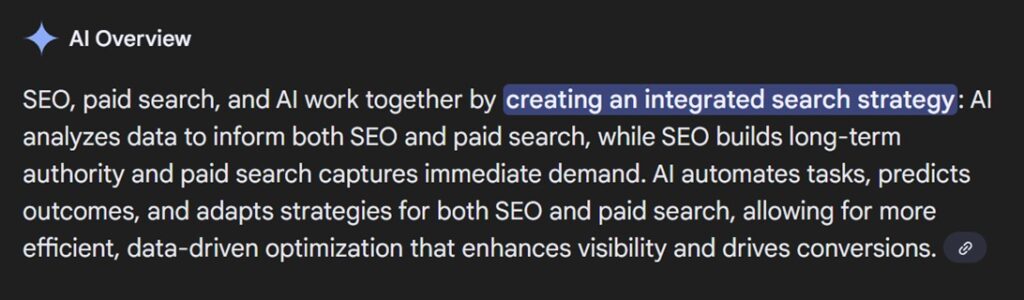
AI is reshaping search behavior by changing how people ask questions and how results are delivered. Instead of relying on short keyword-based queries, like traditional SEO, users are now typing or speaking in full questions and expecting direct answers. Rather than directing people to a list of links, AI tools often deliver responses instantly within the search experience. To generate those answers, they pull from credible, clearly structured online content that is easy for algorithms to interpret and reuse.
GEO best practices:
- Writing conversational, user-friendly content
- Structuring pages around common questions and answers
- Highlighting definitions, summaries or bullet takeaways
- Using schema markup to support search engine interpretation
- Keeping information updated, accurate and easy to cite
GEO builds on strong SEO fundamentals. Without quality content and technical structure, AI tools are less likely to surface your brand in generated answers.
Using SEO, SEM and GEO together
These tactics are strongest when used as part of a unified strategy, not in isolation.
- SEO builds a strong website foundation with sustained traffic and authority
- SEM provides speed, targeting and campaign-based visibility
- GEO keeps your content relevant in AI-driven, conversational search experiences
When aligned to your goals and audience needs, all three approaches complement and reinforce one another.
Key considerations
To get the most out of an integrated approach, avoid common pitfalls like:
- Relying on thin, repetitive or outdated content
- Ignoring accessibility, mobile performance or page speed
- Depending solely on paid traffic without improving your site
- Skipping AI-readiness and schema markup
- Running ads without optimized landing pages
- Failing to measure campaign and content performance
SEO builds your visibility, SEM boosts your reach and GEO prepares you for where search is headed. When you combine them strategically and prioritize accessibility and quality content, you set your website up for long-term success.
If you’re not sure where to begin or want a partner who understands how these strategies work together, contact Flying Orange to learn more about how to start building a smarter, search-ready website.

Flying Orange has been a trusted development resource since 2007, meaning we’ve seen our fair share of design trends. Feel free to reach out for a free quote. We’re here to help with both ongoing, monthly website maintenance, or full website redesigns. We would love to learn more about your needs.